

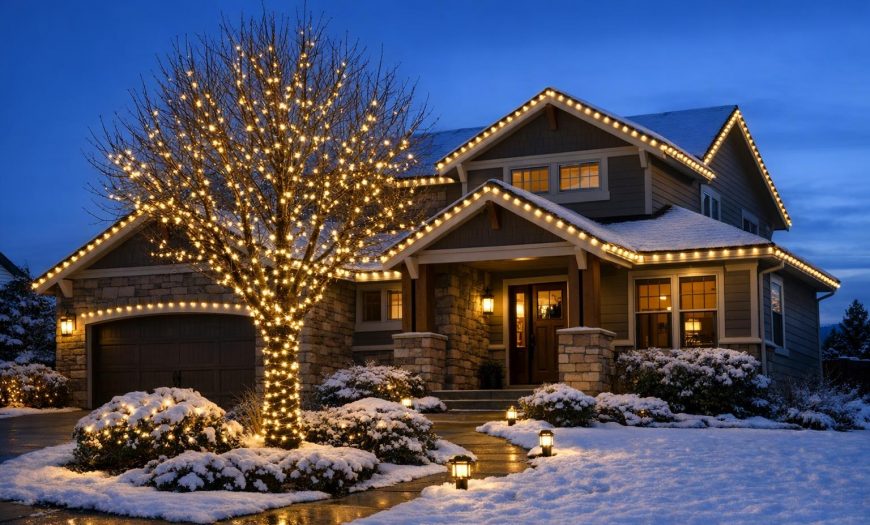
Festive curb appeal in Denver—without the “holiday bill shock”
Denver holiday lighting can look high-end without being high-cost. The key is choosing the right materials (LEDs, timers, and weather-ready components), focusing your design where it’s most visible, and planning ahead so you avoid last-minute rush fees and replacement purchases after wind, snow, or a surprise freeze-thaw cycle. Below are practical, budget-minded ways to get a polished residential or commercial display—built for the Denver metro season.
What “budget-friendly” really means for holiday lighting
Budget-friendly isn’t the same as “cheap lights.” It’s a strategy: spend where it improves safety, reliability, and reusability, and save where it doesn’t affect the final look. For most Denver properties, that comes down to four cost drivers:
1) Design complexity
Rooflines, tall peaks, and multiple elevations take more time and specialized safety setup. A smart budget approach is to emphasize clean lines (eaves, ridges, columns) rather than trying to light every surface.
2) Materials: LED quality and weather-readiness
LEDs cost more upfront but typically lower power usage and reduce replacement headaches compared with older incandescent styles. They also run cooler, which is helpful around dry foliage, wreaths, and other décor.
3) Access and safety requirements
Steep pitches, icy mornings, and hard-to-reach trees increase labor. Budget designs should use high-impact zones that can be installed safely and maintained quickly.
4) Season-long reliability
A display that fails mid-season can cost more than doing it right once. Using seasonal lighting that follows modern safety expectations (wire sizing, strain relief, and overcurrent protection) helps prevent nuisance outages and hazards.
High impact, lower cost: the “3-layer” display plan
When budgets are tight, the fastest path to a professional look is layering. You don’t need more lights—you need better placement.
Layer 1: Roofline + entry (your “signature”)
Outline the eaves and highlight the front door/portico. This reads well from the street and in photos, and it’s often the most “worth it” per dollar.
Layer 2: 1–2 focal points
Pick one tree, one set of columns, or one prominent landscape feature—then do it well (tight wrap, consistent spacing, clean power routing).
Layer 3: Simple finishing touches
A few warm-white shrubs, window silhouettes, or a small pathway run can finish the look. Keep it uniform, and avoid mixing too many bulb sizes or color temperatures.
Where to spend vs. where to save (quick comparison)
| Category | Budget-friendly choice | Why it saves money in Denver |
|---|---|---|
| Light type | Quality LED strands | Lower power draw and cooler operation; fewer mid-season failures. |
| Control | Timers + photocells (as appropriate) | Prevents “all night” run time and reduces wasted electricity. |
| Design | Clean roofline + 1 focal tree | High visibility for fewer total strands; simpler maintenance after storms. |
| Safety & durability | Seasonal-rated components and proper protection | Reduces nuisance tripping, cord damage, and replacements from moisture/strain. |
| Storage | Label + store for reuse | Cuts next-season setup time and prevents tangles/broken bulbs. |
Step-by-step: a practical plan for affordable holiday lighting
Step 1: Choose one “look” and stick to it
Pick warm white, cool white, or a simple 2-color palette and keep it consistent across roofline, trees, and shrubs. Consistency looks premium—even when the display is intentionally simple.
Step 2: Use LEDs as your baseline
If your goal is “Denver savings,” LEDs are one of the easiest wins. Many consumer-facing comparisons report LEDs use substantially less energy than incandescent holiday strands, which can reduce operating costs over the season.
Step 3: Control run time
Put everything on a timer schedule that matches real viewing hours (for many homes and businesses, 5–7 hours per night is plenty). Shortening run time is often more impactful than buying “more efficient” décor after the fact.
Step 4: Favor “front-of-property” value zones
Roofline, entryway, and one front tree typically deliver the biggest visual payoff. Backyards and side yards can be kept minimal—unless you regularly host gatherings there.
Step 5: Avoid false economy on safety
For seasonal displays, use lighting and components intended for holiday decorative use and designed with basic protections in mind (like appropriate wire sizing, strain relief, and overcurrent protection). This matters in Denver where winter moisture and wind can stress connections.
Budget ideas by property type
For homeowners
Most cost-effective upgrade: a clean roofline outline using LEDs + a timer.
Smart “wow” add-on: wrap a single front-yard tree trunk and 2–3 primary limbs for depth, instead of trying to wrap the entire canopy.
If you want inspiration for what’s possible at different budget levels, browse the Gallery and note which designs rely on crisp lines versus dense coverage.
For business owners
Most cost-effective upgrade: outline your storefront/entry and add one photo-friendly focal point (wreath, garland-lit columns, or a lobby-visible tree).
Operational savings tip: standardize your look across locations (same color temperature and spacing) so maintenance is quicker and replacements match.
If you’re weighing options, Denver Christmas Light Installers offers dedicated Commercial Light Installation support for storefronts, offices, and multi-site properties.
Did you know? Quick facts that help you spend smarter
LED strands typically use far less energy than incandescent mini-lights, which can noticeably reduce seasonal operating cost when you run multiple strands nightly.
Heat matters: LEDs run cooler than incandescent lighting, reducing the chance of heat-related issues around décor and helping components last longer.
Timers are a budget tool: controlling run time is one of the simplest ways to lower electricity use—especially for commercial properties that might otherwise stay lit late.
Denver-specific planning: weather, rooftops, and trees
Denver’s holiday season can bring fast-changing conditions—sunny afternoons, cold nights, and intermittent snow and wind. That mix is hard on cheap clips, exposed plugs, and fragile strands. A budget-friendly plan for Denver should prioritize:
Secure mounting over “quick fixes”
Loose runs become failure points during gusty days. Proper clipping and strain relief reduces mid-season service calls and replacement purchases.
Tree lighting that’s efficient to maintain
For many properties, the most economical tree option is a tight trunk-and-primary-limb wrap. If you want more drama, consider a deliberate canopy effect on one signature tree rather than spreading lights across many.
If trees are a major part of your vision, see Outdoor Tree Lighting options.
A clear budget built around packages
Packages can keep scope controlled (and prevent “just one more strand” creep). If you want a fast way to compare approaches, review Holiday Packages & Pricing and choose a base layer you can reuse year after year.
Want a Denver display that looks premium and stays on budget?
Denver Christmas Light Installers designs, installs, maintains, removes, and stores holiday lighting for homes and businesses across the Denver metro area. If you tell us your goals and your budget range, we can recommend a plan that prioritizes the most visible upgrades first.
FAQ: Affordable holiday lighting in Denver
What’s the cheapest way to make my house look professionally decorated?
Prioritize a clean roofline outline and an intentional entryway highlight. That combination reads “finished” from the curb, even before you add shrubs or trees.
Do LED Christmas lights really save money?
In most setups, yes—especially when you’re running multiple strands nightly. LEDs typically use significantly less electricity than incandescent mini-lights, and they tend to last longer, which can reduce replacement costs.
How can I keep my electric bill down during the holidays?
Use LEDs, reduce run time with timers, and focus lighting where it’s seen (front elevation). If you’re lighting a business, consider earlier shutoff on weekdays and extended hours on weekends.
What’s a budget-friendly approach for tall trees?
Wrap the trunk and a few primary limbs for depth and visibility, then stop. You’ll get a strong “anchor” effect without the cost and complexity of full canopy coverage.
Where can I find more answers about scheduling, maintenance, and the process?
Visit the FAQ’s page for quick guidance, then reach out if you want a personalized plan.
Glossary (helpful terms for planning)
LED (Light-Emitting Diode): An energy-efficient light source commonly used in modern holiday strands, known for lower power use and cooler operation.
Color temperature: The “warmth” or “coolness” of white light. Warm white feels more golden; cool white looks brighter/icy.
Photocell: A light sensor that can turn lighting on at dusk and off at dawn (often paired with timers for tighter control).
Strain relief: A method of securing cords and connections so tension isn’t carried by the electrical connection itself—important for wind and movement.
Overcurrent protection: Built-in protection (like fusing) that helps reduce risk if a strand is overloaded or damaged.

Leave feedback about this