

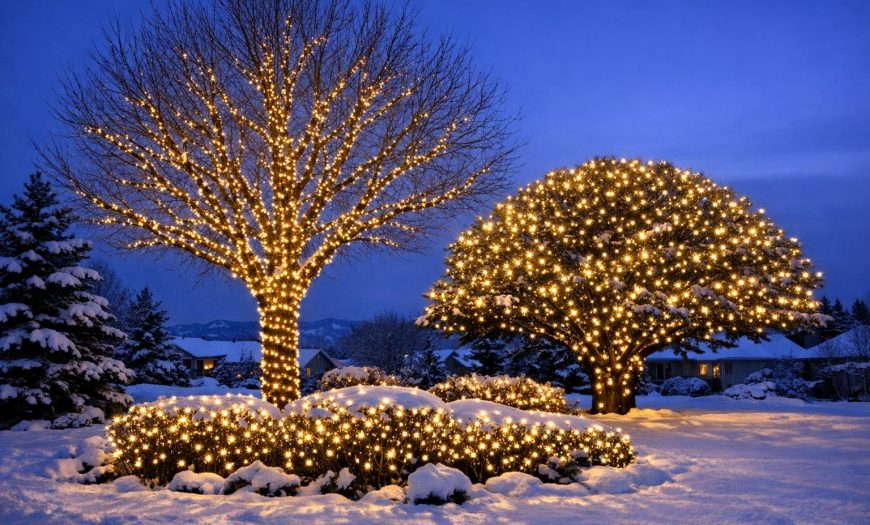
A cleaner, brighter holiday look—without stressing your trees or your electrical
Large evergreens, mature shade trees, and foundation shrubs are some of the best “natural architecture” you have—especially on Denver properties where winter nights come early and outdoor gathering spaces still matter. The trick is choosing the right lighting method (trunk-and-branch wrap vs. canopy glow vs. shrub netting), planning power safely, and installing in a way that looks professional while staying tree-friendly through wind, snow, and freeze/thaw cycles.
Main breakdown: 3 approaches that work best for large trees & shrubs
1) Trunk-and-branch wrapping (the “premium” look)
Best for: leafless deciduous trees (winter structure looks amazing), focal-point evergreens, and trees near the street. This method traces the tree’s natural form by wrapping the trunk and primary limbs with consistent spacing for a crisp, high-end finish.
2) Canopy wrap (the “glowing halo” method)
Best for: big canopies where wrapping every limb would be excessive. Canopy wraps drape lights through the upper structure for an even glow and a softer silhouette. It’s also a great option when you want impact without a dense, “over-wrapped” look.
3) Shrub lighting (nets, mini-lights, and silhouette accents)
Best for: foundation plantings, entry paths, and layered landscape beds. Shrubs look best when coverage is even—no “hot spots,” no dark holes—so the plant reads as a clean shape after dark.
Context: What makes Denver installs different
Denver’s winter conditions can change quickly—sunny afternoons, freezing nights, wind events, and heavy snow dumps. That combination affects how lights sit on branches, how cords lie on the ground, and how long connections stay dry. Using outdoor-rated products, weather-aware routing, and strain relief (so wind movement doesn’t tug on plugs) makes the difference between “looks great all season” and “half the tree is out by mid-December.” Denver fire safety guidance also emphasizes using outdoor-rated lights and being careful around dry vegetation.
Choosing the right lights: size, color, and power (without guesswork)
| Where you’re lighting | Best bulb style | Look you get | Pro tip |
|---|---|---|---|
| Tall evergreens (front yard focal) | Mini LEDs or C7/C9 accents | Dense sparkle or bold points of light | Use bolder bulbs only where you want “presence”—too many large bulbs can overpower the tree. |
| Leafless deciduous trees | Mini LEDs (warm white) or color-changing | Beautiful structure and depth | Wrap trunk + primary branches first; then add secondary limbs where it needs balance. |
| Foundation shrubs / hedges | Mini LEDs or shrub nets | Even “glow shape” | Aim for uniform coverage—nets help, but hand-wrapping can look cleaner on irregular shrubs. |
| Entry trees / walkway accents | Mini LEDs + a few statement points | Inviting “welcome” lighting | Keep color temperature consistent with your roofline lights so the whole property feels intentional. |
LED vs. incandescent: For outdoor installs, LED is typically the practical choice—lower energy use (often cited around ~70–90% less than incandescent for similar applications), cooler operation, and better performance in winter displays. If you love the classic incandescent glow, there are warmer LED color temperatures that keep the look traditional while still reducing load on circuits.
Quick “Did you know?” facts (useful for planning)
Consistent spacing matters more than “more lights.” Even wraps prevent bright clusters (“hot zones”) and dark gaps that make trees look patchy at night.
Canopy wrapping can create a full look with fewer labor hours than wrapping every branch—especially on wide, mature trees.
Timers can cut waste dramatically. A simple schedule prevents lights from running when no one’s awake to enjoy them, and helps protect components during overnight temperature drops.
Tree health matters. Wrapping too tightly or leaving wraps on long-term can stress trees as they move and grow—install with slack and remove at season’s end.
Step-by-step: How to light a large tree (pro workflow that avoids redo’s)
1) Decide the “viewing side” first
Stand where the tree is most often seen (street, driveway approach, front walk, patio). Your spacing and density should prioritize that angle so the tree looks balanced from the primary viewpoint—not just from the ladder.
2) Choose a technique: trunk & branch wrap vs. canopy
Trunk-and-branch wrap: Start at the base of the trunk and work upward, maintaining consistent spacing. Continue onto major limbs to highlight structure.
Canopy wrap: Run an outdoor-rated feed up the trunk to your start point, then drape lights from branch to branch with even spacing for a rounded glow. Keep tension gentle—branches move in wind and snow.
Canopy wrap: Run an outdoor-rated feed up the trunk to your start point, then drape lights from branch to branch with even spacing for a rounded glow. Keep tension gentle—branches move in wind and snow.
3) Plan power and connections before you climb
Map where plugs will land, where cords must cross walkways, and which outlet/GFCI you’ll use. Use outdoor-rated cords and keep connections protected from pooled snowmelt. If a tree requires multiple runs, label circuits so troubleshooting is fast during the season.
4) Install with tree-safe slack
Wrap snug enough to stay put, but not tight enough to pinch bark or restrict movement. Avoid stapling or nailing into the tree. If you’re wrapping smaller limbs, treat them gently—thin bark is easier to damage and shows stress sooner.
5) Do a night check (the professional “finish” step)
Turn lights on after dark and look for: bright clusters, shadowy pockets, crooked lines, or visible cords. Small adjustments at night can elevate the whole display—especially on large trees where daytime installs hide spacing issues.
Shrub lighting tips (so bushes don’t look “spotted”)
For shrubs, the goal is a clean shape. Here are field-tested shrub lighting tips that work especially well for Denver holiday décor:
Use “layers,” not just a surface wrap
Tuck lights slightly into the shrub (not only on the outer tips). That prevents harsh glare and helps the whole plant glow.
Match scale to plant size
Small shrubs look best with mini LEDs. Larger hedges can handle a bit more brightness, but keep spacing consistent across the run.
Hide cords on the “back side”
Route cords behind shrubs and along bed edges where possible. It keeps the daytime look tidy and reduces trip hazards.
Local Denver angle: popular looks that fit Colorado architecture
Across Denver neighborhoods, a few styles consistently look “right” with common rooflines, mature trees, and front-yard landscaping:
Warm white trunk wraps on mature deciduous trees for a refined, winter-garden feel.
Mixed canopy + trunk highlight (canopy glow with a brighter trunk) for big trees where you want depth without heavy labor.
Entry framing using shrub lighting and smaller ornamental trees to guide guests to the front door.
Large tree lighting as the “anchor,” then lighter touches on shrubs—so the display feels designed, not cluttered.
Want to see what these styles look like on real Denver homes and businesses? Browse our inspiration gallery here: View the Gallery.
When professional installation makes the most sense
Large tree lighting can involve tall ladders, roof access for power routing, and multiple circuits—especially with big canopies or multi-tree landscapes. A full-service team can also handle in-season maintenance (storms happen), takedown, and off-season storage so you’re not untangling lights in the garage next year.
If you’re comparing options, you may find it helpful to review what’s included in professional packages (design, labor, materials, weather-proofing, timers, removal, and storage): Holiday Packages & Pricing.
Looking for service details? Explore:
Residential Holiday Lighting (homes, rooflines, trees, and shrubs)
Commercial Holiday Lighting (storefronts, offices, multi-site properties)
Outdoor Tree Lighting (wraps, canopies, focal displays)
Ready to light up your trees and shrubs—without the ladder stress?
Denver Christmas Light Installers designs, installs, maintains, removes, and stores custom holiday lighting across the Denver metro area—so your landscape features look their best all season.
Schedule a Design Consultation
Prefer quick answers first? Visit our FAQ page.
FAQ: Lighting large trees & shrubs in Denver
How do I keep large tree lights from looking uneven?
Pick a consistent spacing pattern and stick to it. After installation, do a night check from the street and adjust any bright clusters or dark gaps. Even spacing typically reads “professional” more than extra density.
Is canopy wrapping better than trunk-and-branch wrapping?
It depends on the tree and the look you want. Trunk-and-branch wrapping highlights structure and feels upscale. Canopy wrapping creates a softer glow and can be more efficient on wide canopies where wrapping every limb would take much longer.
What’s the best way to light shrubs without a “spotted” effect?
Aim for uniform coverage and tuck lights slightly into the shrub so the plant glows instead of glaring. For certain shapes, shrub nets help, but hand-wrapping often looks cleaner on irregular or layered shrubs.
Are LEDs really worth it for outdoor holiday lighting?
For most outdoor setups, yes. LEDs typically use far less energy than incandescent sets and run cooler, which helps with long run times and large displays. If you prefer a classic look, choose warm-white LEDs for a softer tone.
When should I schedule professional tree and shrub lighting in Denver?
If you want prime installation windows (before deep snow and the busiest holiday weeks), it’s smart to schedule early in the season. Large trees and multi-shrub landscapes take longer to install and usually benefit most from early planning.
Glossary (helpful terms you’ll hear during a lighting consult)
Canopy wrap
A method where lights are draped through the upper branches to create an even glow across the tree’s crown rather than wrapping every limb.
Trunk-and-branch wrap
A detailed wrapping method that traces the trunk and primary limbs for a crisp, high-definition look—especially striking on leafless trees.
GFCI outlet
A safety outlet designed to reduce shock risk by cutting power when it senses a fault—especially important for outdoor power in wet or snowy conditions.
Strain relief
A way of securing cords and connections so wind movement doesn’t pull on plugs or sockets—helping prevent outages mid-season.

Leave feedback about this