

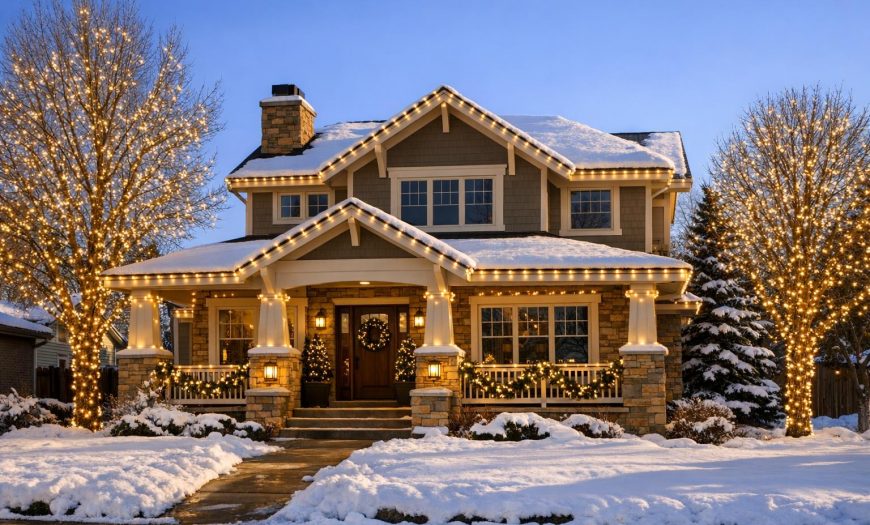
A Denver-first approach to holiday lighting that looks polished, stays safe, and holds up in winter weather
Holiday lights do more than “decorate”—they frame your home’s architecture, guide the eye to your entry, and make your property feel inviting from the street. In Denver, curb appeal has its own rules: fast temperature swings, wind, snow, and bright winter sun can punish cheap clips, exposed connections, and mismatched light color. Below are residential holiday lighting ideas designed specifically for Denver homes—plus practical tips that help your display look intentional all season long.
What “curb appeal” lighting actually means
Strong curb appeal comes from clean lines, balanced brightness, and consistent color temperature. The goal isn’t to add more lights everywhere—it’s to highlight the features buyers, guests, and neighbors notice first: rooflines, peaks, columns, entryways, and mature trees.
Denver factors to design around
Winter wind can tug at strands, snow can bury connections, and melting/refreezing can introduce moisture where it doesn’t belong. That’s why outdoor-rated products and secure mounting matter as much as the design itself—especially around eaves, trees, and walkways.
A quick upgrade that pays off
LED holiday lights typically use far less energy than incandescent strands—often cited around 75% less for ENERGY STAR-style guidance—while staying cooler and lasting longer. That makes it easier to create a crisp, bright outline without worrying as much about heat or operating cost.
If you want a “done-for-you” display (design, install, in-season maintenance, removal, and storage), Denver Christmas Light Installers offers full-service residential holiday lighting built for Denver conditions. For inspiration before you choose a style, browse the Gallery.
High-impact lighting layouts that flatter Denver architecture
1) Clean roofline outline (the “tailored” look)
Outline the roof edge, peaks, and gables with a consistent bulb size and spacing. This reads well from the street and photographs beautifully. In Denver’s bright, clear winter nights, a clean roofline often looks more premium than a busy, mixed-bulb approach.
Best for: Craftsman, Tudor, and contemporary rooflines; homes with strong gables; anyone prioritizing curb appeal over “maximum sparkle.”
2) Entryway focus (welcoming without overdoing it)
Concentrate brightness around the front door: wrap columns, outline the porch beam, add a lit garland line, or frame the doorway. A well-lit entry helps your home feel warm—even on darker December afternoons.
Pro tip: Keep your doorway lights slightly brighter than roofline lights so the eye naturally lands on your entrance.
3) Tree wrapping for depth (your “landscape anchor”)
Denver neighborhoods often feature mature trees—an instant curb appeal advantage. Wrapping trunks and key limbs adds depth and makes your house feel set into the property (not floating behind a flat wall of lights).
If you love the look of professionally wrapped trunks and canopies, explore Outdoor Tree Lighting options for homes and multi-tree yards.
How to plan your display like a pro (step-by-step)
Step 1: Choose one “design language”
Pick a consistent bulb type (mini, C7/C9-style, or color-changing) and a consistent color temperature. Warm white tends to feel classic; cool white reads crisp and modern. If you mix, do it intentionally (example: warm white roofline + cool white tree wrap can look disjointed).
Step 2: Map your “view from the street”
Stand at the curb (or across the street) and identify: (1) the highest roof peak, (2) the front door, and (3) the largest tree. Your best displays create a triangle between these focal points, so the home looks balanced from left to right.
Step 3: Design for Denver weather resilience
Use outdoor-rated light sets and outdoor-rated extension cords outdoors, and keep plug connections out of areas where meltwater can pool or where snow piles up. Consumer safety guidance also emphasizes securing lights to firm supports to reduce wind damage and using proper outdoor cords.
Step 4: Control timing (and keep it tasteful)
A timer or outdoor smart plug keeps your display consistent and reduces wasted runtime. Many households run lights through evening hours, then shut them off overnight—especially helpful if you’re using larger displays or any non-LED décor.
Step 5: Plan maintenance before you install
Decide how you’ll handle a half-out strand or a windy-night drop. Professional installation often includes in-season adjustments—one reason many Denver homeowners prefer a full-service plan rather than climbing ladders after the first snow.
Comparison table: Popular curb-appeal looks (and where they shine)
| Lighting style | Best curb-appeal payoff | Works great for | Watch-outs (Denver edition) |
|---|---|---|---|
| Roofline outline | Makes the home look crisp, upscale, and symmetrical | Most home styles; easy to “read” from the street | Wind can loosen poor clips; keep lines tight and secure |
| Entryway framing | Feels welcoming; great photo backdrop | Porches, columns, covered entries | Keep cords tidy to avoid trip hazards on icy walkways |
| Tree trunk & limb wrap | Adds depth and “neighborhood glow” | Homes with mature trees or corner lots | Allow for sway in wind; secure strands without damaging bark |
| Color-changing accents | Flexible themes (sports, winter, holidays, events) | Homeowners who want multiple “looks” in one season | Avoid over-animation; keep movement subtle for curb appeal |
Where packages can simplify everything
If you’d rather choose a curated look and have everything handled end-to-end, see Holiday Packages & Pricing for options that bundle design, materials, installation, removal, and more.
Local angle: What looks best in Denver neighborhoods
Denver homes range from historic brick bungalows to sleek new builds, but the most flattering lighting plans share a few common moves:
Use warm white on brick and stone
Warm white tends to complement brick façades and natural stone. It gives an “estate” feel without needing a massive display.
Go crisp on modern lines
Cool white or pure white can sharpen modern rooflines and clean stucco finishes. Pair it with a simple entryway highlight so the home doesn’t feel sterile.
Plan for snow visibility
Ground-level décor can get buried quickly. If you want consistent curb appeal through snow events, prioritize rooflines, porchlines, and tree wraps over lawn stakes.
A safety note for Denver winters
Outdoor displays should use outdoor-rated cords and lights, and connections should be kept away from wet areas like snow and ice melt. Many safety checklists also recommend inspecting strands for damage, avoiding damaged cords, and turning off decorations when not in use. If you’d like the “no ladder, no guesswork” route, professional installation helps reduce risk and keeps your display looking consistent.
Ready to upgrade your curb appeal without the weekend workload?
Denver Christmas Light Installers designs, installs, maintains, removes, and stores custom residential holiday lighting across the Denver metro area—so your home looks intentional from the first switch-on through the last winter night.
Prefer to start with questions? Visit the FAQ page.
FAQ: Residential holiday lighting in Denver
What’s the #1 way to improve curb appeal with holiday lights?
A clean roofline outline with consistent bulb size and color temperature. It makes the home look “finished” even if you don’t add yard décor.
Are LED lights worth it for Denver homes?
Yes for most households. LED strands are widely cited as using significantly less energy than incandescent (often around 75% less for ENERGY STAR-style guidance) and they run cooler—helpful for long winter evenings.
How do I keep my lights from looking uneven or “random”?
Choose one dominant style (roofline, entry, or trees), then add one secondary accent. Keep brightness balanced left-to-right, and avoid mixing too many bulb shapes or whites.
What outdoor electrical safety basics should I follow?
Use lights and extension cords rated for outdoor use, inspect cords/strands for damage before installing, keep connections away from wet areas like snow melt, and avoid overloading cords. If you’re unsure about your setup, a professional installer can plan routing and mounting for safety and durability.
Can you do a display that’s festive but not too bright?
Absolutely. A warm roofline with a gently brighter entryway and one wrapped tree often looks elegant and neighborhood-friendly—especially on smaller lots or tightly spaced Denver streets.
Glossary (quick, homeowner-friendly)
Curb appeal
How attractive your home looks from the street—especially the roofline, entry, and landscaping.
Color temperature
The “warmth” or “coolness” of white light. Warm white feels golden; cool white feels crisp and icy.
Outdoor-rated
Designed for exterior conditions such as moisture and temperature swings (important for cords, plugs, and light sets outside).
GFCI
A ground-fault circuit interrupter helps reduce shock risk by cutting power quickly if a fault is detected—commonly recommended for outdoor electrical use.
In-season maintenance
Service support during the season to fix outages, adjust loose sections, or replace failed components after weather events.

Leave feedback about this