

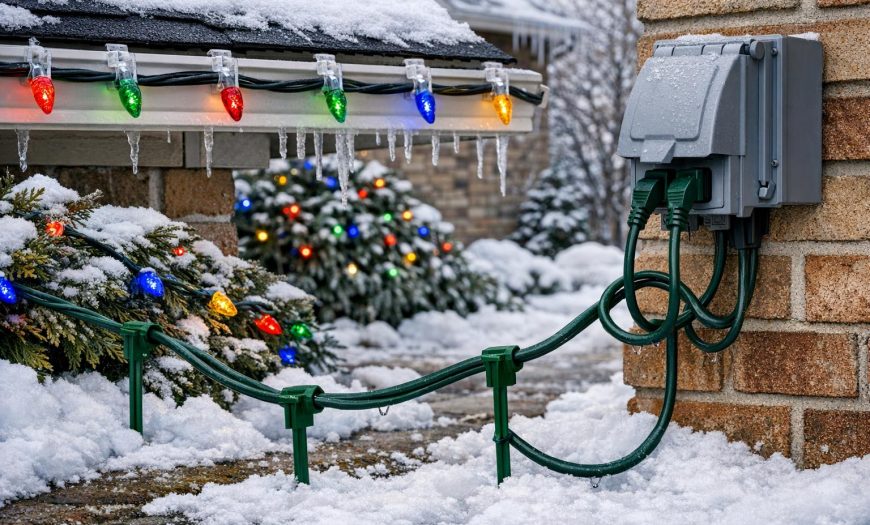
Protect your home, your business, and your season—without dimming the fun
Denver winters bring real-world challenges for outdoor holiday lighting: snow melt, refreeze, wind, and temperature swings that stress cords, plugs, and connections. A great-looking Denver Christmas display should also be a safe one. Below are practical, electrician-minded steps you can follow to reduce shock risk, prevent overheated cords, and keep your lighting reliable from the first flip of the switch through takedown.
Quick note: This guide focuses on holiday lighting safety for plug-in, temporary decorative lighting. If you’re planning permanent exterior outlets, new circuits, or hardwired architectural lighting, that’s a different scope—talk to a licensed electrician for design and permitting.
Why Denver holiday installs need extra electrical caution
Outdoor holiday lights often run for hours at a time, routed across rooflines, gutters, fences, trees, and storefront edges. In Denver, snow and ice can create “wet location” conditions even when it’s not actively storming—water can track along cords into connections, then freeze, expanding tiny gaps and stressing insulation. Wind can also cause strands to rub against shingles, brick, or metal trim, wearing jackets over time. These factors make electrical safety tips more than a checklist—they’re what keeps your display both bright and dependable.
Start with the right materials (it matters more than people think)
Many holiday lighting problems begin with mismatched or indoor-only components used outside. Build your setup around equipment designed for outdoor exposure.
Item
What “safe enough” looks like
Denver-specific tip
Light strings
Outdoor-rated, from reputable manufacturers; safety certification marks tied to seasonal/decorative lighting standards (commonly UL 588) where applicable
LEDs run cooler and typically reduce load on circuits—helpful when cold weather encourages longer run-times
Extension cords
Outdoor-rated (look for “W” or “outdoor use” marking), appropriate length, undamaged jacket, no loose blades
Avoid thin, bargain cords—cold makes cheap insulation stiffer and more likely to crack under bending
Timers / smart plugs
Outdoor-rated enclosure, weather-sealed cover, load rating that exceeds your total wattage
Keep the device off the ground and oriented to reduce water pooling in receptacles
Safety standards and certification marks can help indicate products were evaluated for seasonal decorative use (often associated with UL 588 for holiday decorative products). Even then, counterfeit labels exist, so buy from reputable sources and inspect everything before installation.
Electrical safety checklist for holiday lights (practical, not theoretical)
1) Inspect every strand before it goes up
Check for frayed insulation, cracked sockets, loose bulbs, scorch marks near plugs, and bent prongs. If a cord feels brittle or looks “whitened” at bend points, replace it. Outdoor installs magnify small problems because moisture and movement accelerate failure.
2) Use GFCI protection for outdoor power
Ground-fault circuit interrupter (GFCI) protection is a must for outdoor receptacles and plug-in holiday lighting because it reduces shock risk when moisture gets into a connection. If your outdoor outlet is GFCI-protected, test it before the season (use the “Test” and “Reset” buttons). If you’re unsure whether the circuit is protected, a quick check by a qualified pro can prevent a lot of headaches.
3) Add a drip loop to keep water out of connections
Before cords plug into an outlet, timer, or another cord, create a small downward loop in the cord so water drips off the lowest point instead of traveling along the cable into the connection. This simple shape can dramatically reduce nuisance trips and corrosion.
4) Don’t overload circuits, cords, or plugs
Overload is one of the most common causes of overheated cords and melted plugs. Use these habits:
Follow the manufacturer’s “max connections” limit for linking strands end-to-end.
Distribute large displays across multiple circuits rather than stacking everything on one exterior outlet.
Respect cord ratings—a long, thin cord can heat up when loaded, especially if coiled.
5) Keep connections off the ground and out of snowmelt paths
In Denver, snow piles and sunny-day melt can turn sidewalks, mulch beds, and turf edges into wet zones. Elevate plug connections using mounting points, clips, or stakes so connectors aren’t sitting in slush. This also helps prevent accidental damage from shovels and snow blowers.
6) Never pinch cords in windows, doors, or garage openings
A pinched cord can crack insulation and create hidden shorts—especially when cold weather makes plastic less flexible. Route cords through proper exterior outlets and weather-protected covers instead.
7) Use the right fasteners—avoid anything that can pierce insulation
Skip staples, nails, or metal hooks that can cut or compress wiring. Use purpose-made light clips for gutters, shingles, and trim. A secure clip reduces wind movement, which reduces abrasion and long-term cord wear.
Ladder safety is electrical safety (because falls cause “yank-and-arc” problems)
Many holiday-light incidents start with a slip, not a spark. When someone loses balance, cords can be yanked from outlets, plugs can partially separate, and connections can arc—especially in wet conditions. If you’re using a ladder:
Maintain three points of contact when climbing (two hands and one foot, or two feet and one hand).
Set the ladder on firm, level ground and avoid icy spots or loose gravel.
Don’t overreach; move the ladder instead of leaning sideways.
Keep cords organized so you’re not stepping over them while descending.
Troubleshooting: when lights trip the GFCI or flicker
If your display keeps shutting off, treat it as a safety signal—not just an annoyance.
Common causes
Moisture in a connection: unplug, dry, elevate the connection, and add a drip loop.
Damaged strand or cord: swap sections to isolate the failure; replace damaged components.
Overload: reduce the number of linked strands or split the display across multiple circuits.
Loose plug blades: a worn plug can heat up or intermittently disconnect—replace it.
What not to do
Avoid “fixes” like wrapping wet connections tightly with household tape, forcing cords into door gaps, or bypassing GFCI protection. Those approaches can hide the symptom while the hazard grows.
Denver-specific planning: snow, wind, and rooflines
A few local habits can make a major difference:
Route away from known snow-slide zones (eaves where snow sheds) to prevent cord strain and ripped clips.
Secure against wind along corners and peaks; movement causes abrasion, which leads to shorts.
Use timers to reduce runtime overnight—less time energized means less heat stress, less wear, and fewer “mystery” trips.
Plan for safe takedown after storms; waiting for ice to clear can be the safest choice.
Want inspiration that fits Denver architecture—from historic bungalows to modern storefronts? Browse our lighting gallery to see what’s possible with safe, professionally installed designs.
Need help building a safer, cleaner holiday lighting plan?
Denver Christmas Light Installers designs, installs, maintains, removes, and stores holiday lighting for homes and businesses across the Denver metro. If you want professional-grade results with safety-forward routing and weather-aware connections, we’re ready to help.
FAQ: Holiday lighting safety in Denver
Do outdoor Christmas lights need to be on a GFCI outlet?
For plug-in outdoor holiday lighting, GFCI protection is strongly recommended because outdoor moisture can create shock hazards. If your exterior receptacle doesn’t appear to have GFCI protection, consider having it evaluated and updated by a qualified professional.
How many strands can I connect together?
Always follow the manufacturer’s limit printed on the packaging or tag. Mixing different sets or ignoring the max connection count can overheat plugs or trip protection devices, even with LED lights.
Why do my lights work fine until it snows, then they trip?
Snow melt can introduce moisture into a low connection point, a cracked socket, or a partially separated plug. Elevate connections, add drip loops, and replace any strand with damaged insulation. Treat repeated tripping as a safety warning.
Is it safe to wrap outdoor tree trunks with lights?
It can be safe when you use outdoor-rated lights, avoid crushing cords, and keep plug connections protected from ground moisture. For mature trees and tall canopies, professional installation reduces ladder risk and helps keep connections weather-aware. Learn more about our outdoor tree lighting.
Do you handle maintenance during the season?
Yes—maintenance is part of keeping a display safe and consistent. If a section goes out, a connection loosens, or weather causes an issue, timely service prevents small electrical problems from turning into bigger ones. If you have more questions, visit our FAQ page.
Glossary (helpful terms for safer installs)
GFCI (Ground-Fault Circuit Interrupter)
A protective device that shuts off power quickly when it detects current leaking to ground—common in outdoor/wet areas to reduce shock risk.
Drip loop
A downward loop in a cord that encourages water to drip off before reaching the plug or receptacle.
Load (electrical load)
How much power your lighting draws from a circuit. Too much load can overheat cords or trip breakers/GFCIs.
Outdoor-rated cord
A cord designed for exterior environments with a jacket intended to handle moisture, abrasion, and temperature changes better than indoor cords.

Leave feedback about this