

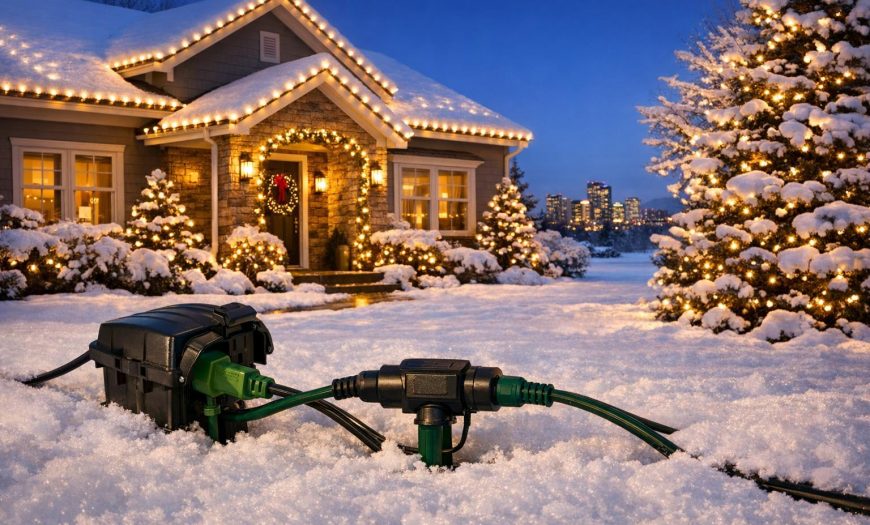
Set it once, enjoy it all season—without climbing back on the ladder
Smart lighting controls make holiday decorating feel effortless: your display turns on at dusk, shuts off at a reasonable hour, and keeps running reliably through Denver’s snow, wind, and temperature swings. Whether you’re lighting a home in Wash Park or outlining a storefront in LoDo, automation helps you protect your investment, reduce energy waste, and keep your property looking consistently festive—night after night.
Why smart controls matter for Denver Christmas lights
Denver’s winter weather adds stress to outdoor electrical connections. Smart controls (properly installed with outdoor-rated equipment) help you:
• Keep consistent on/off times—even when your schedule changes
• Avoid accidentally running lights all day (and paying for it)
• Group areas (roofline, trees, entryway) for cleaner, more intentional designs
• Reduce nuisance trips by keeping connections protected and loads reasonable
Energy savings: LEDs + automation = real impact
If you’re investing in automation, pair it with LED light strings. ENERGY STAR notes certified decorative LED light strings use about 70–75% less energy than incandescent options. That’s before you add scheduling that turns everything off late at night and during daylight hours.
Practical takeaway
Switching to LED plus using timers/schedules is one of the easiest ways to make a large display feel “big” visually—but lighter on your electric bill.
Smart control options (and which homes/businesses they fit best)
“Smart” can mean a few different things. The right choice depends on your property layout, how many circuits you have available, and whether you want simple scheduling or advanced effects.
| Control Type | Best For | Pros | Watch-outs in Denver |
|---|---|---|---|
| Outdoor timer | Simple rooflines, wreaths, small trees | Affordable, reliable, “set and forget” | Use outdoor-rated units; protect plugs from snow melt and pooling water |
| Outdoor smart plug | Most homes; renters; quick control from a phone | Schedules + remote on/off; some models support sunrise/sunset automation | Needs stable Wi‑Fi; choose weatherproof housings and outdoor-rated cords |
| Smart switch / smart outlet | Permanent exterior outlets; dedicated holiday circuits | Clean install; fewer exposed connections | Electrical work may require a licensed electrician; confirm outdoor/GFCI requirements |
| Multi-zone controller | Large homes; commercial façades; multi-area displays | Run roofline, trees, and entryway on different schedules | Plan loads per circuit; keep connectors elevated and protected from snow/ice |
| RGB / color-changing systems | Statement homes, events, branded commercial installs | Scenes, animations, and holiday-to-holiday flexibility | More components outdoors; cable management and weatherproofing are critical |
How to automate your display the right way (step-by-step)
1) Start with a lighting “map”
Break your property into zones: roofline, peaks, garage outline, columns, trees, and walkway. Automation works best when each zone has a purpose (for example: roofline always on, trees only on weekends).
2) Choose the control method that matches your goals
If you only want dependable on/off scheduling, a timer or smart plug often covers it. If you want scenes (weekday vs. weekend) or separate schedules by area, plan on multi-zone control.
3) Make safety part of the plan
Use outdoor-rated light strings, plugs, and extension cords. Plug exterior displays into GFCI-protected outlets, and protect connections from moisture using weatherproof covers/enclosures. Denver Fire Department guidance also cautions against overloading extension cords and recommends limiting how many sets are connected per cord. These details matter more when snow melt can find its way into a connection point.
4) Program schedules that look great and save power
Most Denver homes look best when lights come on around dusk and turn off before the late-night hours. A common approach: sunset-on, off by 10:00–11:00 pm on weeknights, later on weekends. If you host gatherings, add a one-tap “Party” scene to keep everything on for a set time.
5) Build in a maintenance plan
Even great products take a beating in Colorado weather. Smart control makes it easier to notice problems (one zone suddenly off), then correct quickly. For commercial properties, keeping displays consistent helps maintain curb appeal through peak shopping weeks.
Pro tip for reliability
Keep plug connections off the ground and away from where snow piles up. Many outages happen at connection points—especially where cords meet and moisture can intrude.
Pro tip for energy savings
LEDs already use significantly less energy than incandescent. Add automation so lights aren’t on during daylight or overnight, and your savings compound over the season.
A Denver-specific angle: weather, Wi‑Fi, and visibility
Snow and ice load: Wrapped trees and rooflines can collect snow. Secure attachment points, avoid pinched wires, and use weatherproof connection protection so melting snow doesn’t drip into plugs.
Big temperature swings: Rapid warm-ups and freezes can stress plastics and insulation. Outdoor-rated products are designed for that; indoor-only items are not.
Wi‑Fi reach: If you rely on smart plugs, confirm signal strength at exterior outlets (especially detached garages or commercial façades with thick walls). When Wi‑Fi is weak, a basic outdoor timer can be a dependable fallback.
Neighborhood curb appeal: Automation helps you keep a consistent “on” window, so your home or business looks polished when people are out enjoying Denver’s holiday season.
Need inspiration before you automate?
If you want ideas for zones (roofline + trees + entry pop), explore examples of what’s possible with clean design and consistent control.
Automating trees is a quick win
Trees often look best when they’re on a separate schedule than the roofline—especially for commercial properties that want a “wow” moment during peak evening traffic.
When to call a pro (and what we handle end-to-end)
Automation is easiest when the installation is designed with controls in mind from the start. Denver Christmas Light Installers provides one-stop seasonal service—design, installation, maintenance, removal, and off-season storage—so your display looks intentional and stays reliable through the full season.
• Clean zone planning (roofline vs. trees vs. entry)
• Weather-conscious routing and connection protection
• Maintenance support when a section goes out mid-season
• Takedown and storage so your setup is easier next year
Ready to automate your Denver holiday lighting?
Tell us what you want to light—roofline, trees, entry, or a full commercial façade—and we’ll recommend a control approach that fits your property, your schedule, and Denver’s winter conditions.
FAQ: Smart holiday lighting & automation
Do smart plugs work in freezing weather?
Many do, as long as they’re outdoor-rated and protected from direct moisture intrusion. The bigger reliability issue in Denver is usually water at connection points (snow melt and freeze-thaw cycles), not the “smart” feature itself.
Will automation lower my electricity bill?
Automation helps by preventing wasted runtime. Pair it with LED light strings for the biggest impact—ENERGY STAR reports decorative LED light strings use roughly 70–75% less energy than incandescent.
How many zones should I create?
Most homes do well with 2–4 zones: roofline, entry/garland, trees, and accents (wreaths/windows). Commercial properties often prefer more zones so entrances and brand-forward areas can stay highlighted later.
What’s the safest way to power outdoor holiday lights?
Use outdoor-rated products, plug into GFCI-protected outlets, avoid overloading cords, and keep connections protected and off the ground where possible. If your setup requires changes to outlets/switches, consult a qualified professional.
Can you automate color-changing holiday lights?
Yes. Color-changing systems can run schedules and scenes (weekday vs. weekend, special event nights, team colors, and more). They benefit from professional planning because they include controllers, power injection considerations, and more outdoor connection points to protect.
Glossary (quick definitions)
GFCI
Ground-Fault Circuit Interrupter. A protective device/outlet that shuts off power quickly when it detects a ground fault, reducing shock risk in damp locations.
Outdoor-rated
A product designed and listed for exterior conditions (moisture, temperature swings, UV exposure). Always use outdoor-rated cords and devices outside.
Zone (lighting)
A group of lights controlled together (for example: roofline on one schedule, trees on another).
Sunset/sunrise scheduling
Automation that turns lights on/off based on local dawn/dusk times, adjusting as days get shorter or longer.

Leave feedback about this