
Make your trees the centerpiece of your outdoor holiday lighting
Denver winters have a unique kind of beauty—crisp nights, snow-dusted branches, and dramatic silhouettes. Tree up lighting is one of the cleanest ways to turn that winter landscape into a warm, high-end holiday scene. Done well, it adds depth, “layers” your yard visually, and makes your roofline and walkway lights feel more intentional instead of scattered.
What tree up lighting is (and why it looks so premium)
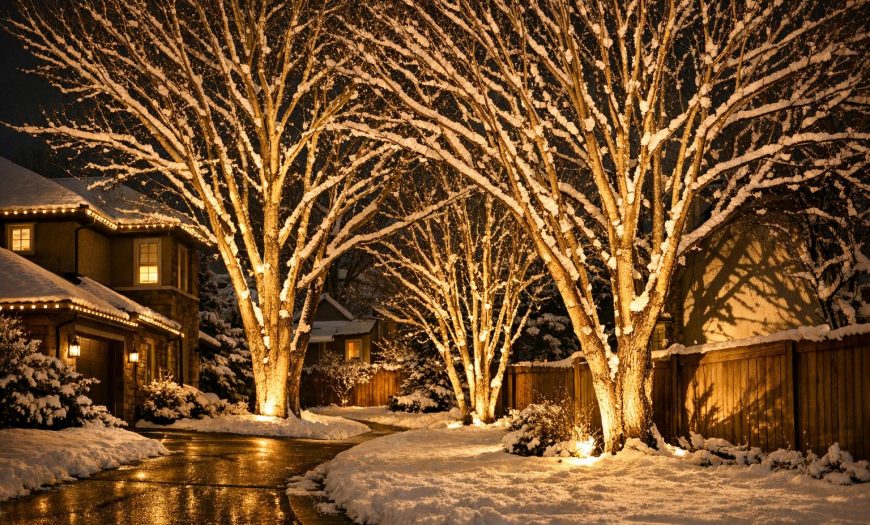
Tree up lighting uses ground-based fixtures aimed upward to highlight a trunk, branching structure, and canopy. Instead of “decorating the tree” with visible strings everywhere, you’re sculpting the tree with light—especially effective on mature trees common across the Denver metro area.
Up lighting vs. downlighting (moonlighting): know the difference
Up lighting adds drama by pushing light up the trunk and into the branching. Downlighting (often called moonlighting) places fixtures higher in a tree and aims them downward to create soft, natural-looking pools of light and shadow on the ground. Many of the best holiday designs use both for dimension—up lighting for form, moonlighting for ambience.
Core up lighting techniques for trees (with practical placement tips)
1) Trunk-and-structure uplight (the “architectural” look)
Ideal for deciduous trees when branches are bare (a classic Denver winter look). Place one or more uplights near the base, aimed up along the trunk line. If the tree has multiple main trunks, use separate fixtures so each trunk reads clearly instead of creating one bright hotspot.
Pro tip: Step back to the curb and adjust the aiming so the trunk is bright, but the fixture itself isn’t obvious. Hidden fixtures make the lighting feel “built-in,” not temporary.
2) Canopy wash uplight (soft glow through branches)
This technique uses wider beam spread or multiple fixtures to “fill” the lower canopy with light. It works beautifully when you want the tree to feel larger and more luminous (especially when there’s fresh snow reflecting light).
If your canopy is dense, a single uplight often won’t reach through—using two or three fixtures spaced around the base usually creates a more even glow.
3) Cross-lighting (reduce shadows and add depth)
Cross-lighting means placing two fixtures at different angles so they “meet” on the trunk or key branches. This minimizes harsh shadow lines and helps bark texture read from multiple viewpoints (front door, street, driveway).
4) Silhouette and shadowing (dramatic, high-contrast effects)
If you have a wall, fence, or garage surface near a tree, you can aim lights to throw branch shadows onto that backdrop. This is especially striking in winter when branches are bare. The key is distance: the closer the tree is to the surface, the crisper the shadow edges.
Choosing the right “look”: color temperature, brightness, and beam spread
Tree up lighting looks best when it matches the rest of your outdoor holiday lighting. Many designers recommend sticking to a warm-white range for a welcoming, residential feel and avoiding very cool temperatures that can look harsh or commercial.
| Decision | What to consider | Best for Denver winter décor |
|---|---|---|
| Color temperature (Kelvin) | Warmer looks inviting; cooler can read icy/industrial if overused. | Warm white for most homes; use cooler tones only as an intentional accent. |
| Brightness (lumens) | Lumens matter more than watts for LED. More height/width needs more output or more fixtures. | Use multiple modest fixtures for even coverage instead of one overly bright hotspot. |
| Beam angle | Narrow beams emphasize trunk/branches; wider beams wash the canopy. | Mix narrow + wide for a layered look (structure + glow). |
| Fixture style | Stake lights are flexible; well lights are discreet and durable if installed correctly. | Well lights near walkways/driveways to reduce trip hazards and improve curb appeal. |
Design consistency matters: If your roofline is warm white but your tree up lights are cool white, the yard can feel mismatched. Keeping the “white tone” consistent is one of the simplest upgrades you can make for a cohesive, high-end look.
Safety and reliability in Denver: snow, ice, wind, and walkways
Avoid the most common winter problems
- Keep cords and connections out of snow and standing water: elevate connections where possible and use weather-rated components outdoors.
- Plan for freeze/thaw: fixtures can shift as the ground freezes. A quick mid-season aim check keeps your display crisp.
- Mind pedestrian paths: prioritize low-profile well lights or carefully placed stakes to reduce trip hazards near sidewalks and driveways.
- Be tree-friendly: avoid anything that can constrict growth—never cinch straps/wires tight around branches for long periods.
Quick safety note: Outdoor holiday lighting should be specifically rated for outdoor use and installed with winter conditions in mind. If you’re unsure about power, load, or placement near wet areas, it’s worth having a professional handle the design and setup.
Local design ideas for Denver outdoor holiday lighting
For Denver, tree up lighting shines (literally) because winter branch structure is part of the show. A few design directions that look especially good in Colorado:
Warm white trunks + sparkling canopy
Use warm up lighting to reveal bark texture, then add subtle mini-lights in the canopy for sparkle. This balances “glow” and “twinkle” without looking overdone.
Color-changing accents for focal trees
Keep most of the property classic, then use color-changing fixtures on one statement tree (front yard centerpiece or commercial entry). It reads intentional and avoids the “everywhere at once” effect.
Snow-friendly placement plan
In areas where snow piles up, raise vulnerable connections, use more discreet fixture locations, and avoid placing equipment where shoveling or plowing will constantly hit it.
Want inspiration before choosing a style? Browse the Denver Christmas Light Installers gallery to see how tree lighting can complement rooflines, entryways, and commercial facades.
Ready to elevate your trees with professional up lighting?
Denver Christmas Light Installers designs, installs, maintains, removes, and stores custom holiday lighting—so your display looks polished all season and comes down safely when winter is done.
FAQ: Tree Up Lighting & Outdoor Holiday Lighting in Denver
How many uplights does a typical tree need?
It depends on trunk count, canopy width, and viewing angles. Many medium trees look best with two fixtures for balanced coverage, while large multi-trunk trees may need three or more to avoid dark “dead zones.”
Should my tree up lights match my roofline lights?
Yes, matching the overall tone (warm vs. cool) makes the whole display feel intentional. If you want color on trees, consider keeping rooflines classic and using color as an accent on one or two focal areas.
What’s the difference between tree wrapping and uplighting?
Wrapping puts string lights directly on the trunk/branches for sparkle and outline. Uplighting uses fixtures from the ground to illuminate the tree’s natural shape. Many premium designs combine both—uplighting for form, wrapping for twinkle.
Will snow affect my uplighting?
Snow can reflect light beautifully, but it can also bury fixtures or shift aiming as the ground freezes and thaws. A quick mid-season adjustment and smart placement away from plow/shovel zones keeps performance consistent.
Do you offer tree lighting as part of a full holiday display?
Yes—tree up lighting often looks best as part of a cohesive plan that includes rooflines, entries, and landscape features. If you want details on what’s included, see the residential holiday lighting and commercial light installation pages.
For more common questions about scheduling, installation, and seasonal service, visit the FAQ’s page.
Glossary (helpful lighting terms)
Up lighting: A technique where fixtures are placed at ground level and aimed upward to highlight a tree’s trunk, limbs, and canopy.
Moonlighting (downlighting): Fixtures placed higher in a tree and aimed down to create soft, natural pools of light and gentle shadows on the ground.
Kelvin (K): A measure of white-light “tone.” Lower Kelvin is warmer (more golden); higher Kelvin is cooler (more blue/white).
Lumens: A measure of visible light output (brightness). For LED fixtures, lumens are more useful than wattage for comparing brightness.
Beam angle: How narrow or wide the light spreads. Narrow beams create focused highlights; wide beams create a softer wash.

Leave feedback about this