

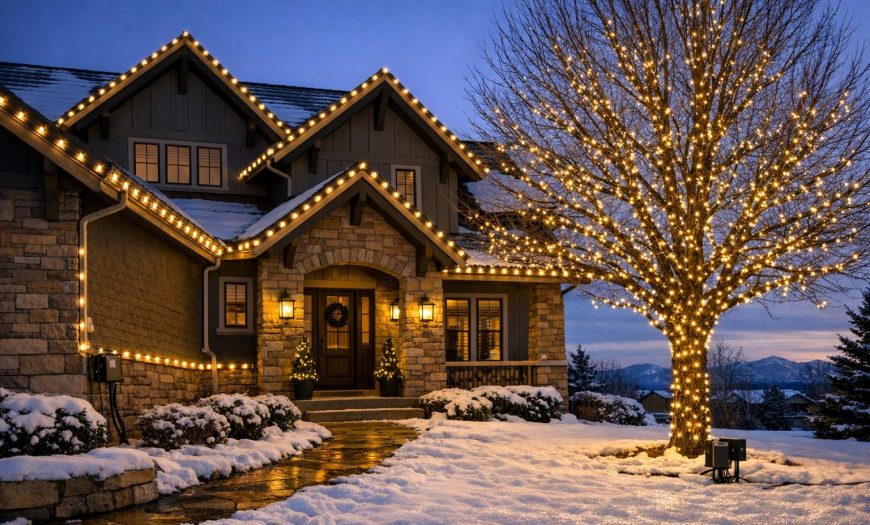
Secure the best schedule, the cleanest design, and the smoothest season—before Denver’s calendar fills up
Early scheduling isn’t just a “nice-to-have” for Denver Christmas lighting. It’s how homeowners and business owners protect their time, reduce last-minute stress, and get the display they actually want—installed safely and working reliably through the season. When you book early, you’re not competing with the rush for limited install windows, unpredictable weather, and the reality that the most in-demand dates get taken first.
What “early booking” really means (and why it changes your results)
In a perfect world, everyone would decide on holiday lights at the same time. In real life, demand ramps up fast—especially once nights get longer and neighborhoods start lighting up. Early booking gives you a wider range of appointment options, more time for thoughtful design, and fewer compromises. It also supports a better install: crews can work methodically, test thoroughly, and plan around rooflines, landscaping, and power access instead of rushing to meet a deadline.
Best rule of thumb for holiday light booking in Denver: Plan your installation before the calendar flips into peak season. The earlier you reserve, the easier it is to get the time slot that fits your schedule and the look that fits your property.
The real benefits of booking early (homeowners + businesses)
Early scheduling helps in ways most people don’t think about until they’ve lived through a rushed season. Here’s what it protects:
1) Better appointment availability
Peak weeks compress quickly. When you reserve early, you’re choosing an install window—not accepting what’s left.
Peak weeks compress quickly. When you reserve early, you’re choosing an install window—not accepting what’s left.
2) More design options (and fewer compromises)
Want a crisp roofline, wrapped columns, lit pathways, or standout trees? Early planning gives time to map out the cleanest visual lines and the safest cable routes—without rushing decisions.
Want a crisp roofline, wrapped columns, lit pathways, or standout trees? Early planning gives time to map out the cleanest visual lines and the safest cable routes—without rushing decisions.
3) A smoother install (especially for complex properties)
Multi-story homes, steep pitches, mature trees, courtyards, and commercial façades all take additional planning. Early booking means your installation can be approached with the right time and attention.
Multi-story homes, steep pitches, mature trees, courtyards, and commercial façades all take additional planning. Early booking means your installation can be approached with the right time and attention.
4) More time for testing + maintenance planning
A professional holiday lighting setup isn’t “hang lights and hope.” Early installs allow time to test sections, confirm timers, and address any issues before the busiest weeks.
A professional holiday lighting setup isn’t “hang lights and hope.” Early installs allow time to test sections, confirm timers, and address any issues before the busiest weeks.
5) Less risk from last-minute safety shortcuts
National safety guidance emphasizes using only lights rated for the location (indoor vs. outdoor), avoiding overloaded connections, and using products tested by recognized labs (like UL or ETL). Planning early helps ensure these details aren’t rushed.
National safety guidance emphasizes using only lights rated for the location (indoor vs. outdoor), avoiding overloaded connections, and using products tested by recognized labs (like UL or ETL). Planning early helps ensure these details aren’t rushed.
Early booking vs. last-minute booking (quick comparison)
| Category | Early Scheduling | Late Scheduling |
|---|---|---|
| Install date choices | More flexible | Limited |
| Design planning time | Comfortable | Compressed |
| Weather flexibility | Easier to reschedule | Harder to fit in |
| Stress level | Lower | Higher |
| Business visibility | Earlier seasonal impact | Missed early traffic |
If you’re a business owner, the “early impact” point matters more than most realize. The earlier your storefront or property is lit, the longer your display works as a nightly signal that you’re open, active, and welcoming.
Quick “Did you know?” facts that affect your holiday lighting plan
LED lights can significantly reduce power use. Many sources report LED holiday lighting uses far less electricity than incandescent strings—often around 75% less (and sometimes more), depending on the product type.
Electrical safety details matter. Safety guidance encourages using lights that are safety-tested by recognized labs, using outdoor-rated products outdoors, and avoiding overloaded connections.
Timers aren’t just convenient—they’re practical. Automating “on/off” times can cut unnecessary run time and keep your display consistent night after night.
Notes are based on public energy-efficiency and safety guidance from U.S. energy resources and consumer safety organizations.
A practical early-booking checklist (simple, effective, and Denver-ready)
If you want a display that looks sharp from the street and behaves reliably through the season, use this checklist before you schedule:
Walk your property at dusk. Note where darkness “falls off” (roof peaks, entryways, trees, corners of the lot). Dusk reveals what daytime planning misses.
Decide what matters most: roofline, entry, trees, or yard features. A clean, intentional design almost always beats “more lights everywhere.”
Confirm power access and timer locations. Where are your outdoor outlets? Where should timers live so cords stay tidy and protected?
Think through snow and wind exposure. In Denver, setups should be planned with winter conditions in mind—secure attachment points, neat cable routing, and outdoor-rated components.
Design tip: If you’re choosing between “roofline only” and “roofline + one focal point,” the focal point (like a tree wrap or a lit entry) often creates the biggest wow-factor for the least visual clutter.
Local angle: why early scheduling is especially smart in Denver, Colorado
Denver’s holiday season has its own rhythm. As temperatures drop and winter weather becomes less predictable, installation days can get disrupted—especially for taller rooflines and complex commercial properties. Early scheduling gives you breathing room to handle weather shifts without pushing your display into the “after the moment” window.
For homeowners: You’ll enjoy your lights longer, and you’re less likely to be squeezed into a narrow scheduling window.
For businesses: Early installs help your property look “season-ready” for more nights—great for walk-in traffic, evening visibility, and holiday events.
If you want inspiration before you commit, browse recent installs and styles in the Denver Christmas Light Installers gallery.
Ready to reserve your holiday lighting slot?
Denver Christmas Light Installers provides design, installation, maintenance, removal, and off-season storage—so your display looks great and stays reliable through the season.
Book a Consultation
Prefer to compare options first? View holiday packages and pricing to get a feel for what fits your property.
FAQ: Early scheduling for holiday light installations in Denver
How early should I book my Denver Christmas lighting installation?
Early is best—especially if you want a specific week, a complex design, or a commercial installation. Booking ahead gives you more scheduling flexibility and more time for design planning and testing.
Does early booking affect the design options I can choose?
Yes. Early scheduling allows for a more intentional layout (rooflines, trees, entryways, pathways) and reduces the chance you’ll need to simplify due to time constraints.
What’s included with professional holiday lighting services?
Many full-service setups include design consultation, installation, maintenance support, takedown, and storage. If you want an all-in-one plan, start with residential lighting or commercial lighting installation.
Are LED lights worth it for holiday displays?
For many properties, yes. LED holiday lights commonly use substantially less electricity than incandescent lights, and they run cooler. They’re a practical choice if you want a bright look with lower seasonal operating costs.
Where can I find more answers about scheduling, maintenance, and what to expect?
Visit the FAQ page for quick details, then reach out if you want recommendations tailored to your property.
Glossary (helpful holiday lighting terms)
Outdoor-rated lights
Lighting designed and tested for exposure to moisture and temperature swings. Outdoor-rated products should be used outdoors.
UL / ETL listed
Marks that indicate a product has been tested to recognized safety standards by an independent laboratory.
Roofline lighting
A clean outline along eaves, peaks, and architectural edges—often the foundation of a polished display.
Tree wrap
Lights wrapped around a trunk and major limbs for a tight, elegant look. For dedicated tree designs, see outdoor tree lighting.
Timer
A control device that turns lights on/off automatically at set times to improve consistency and reduce unnecessary run time.

Leave feedback about this